Unearthing Ancient Secrets: Stonehenge's Altar Stone Traced to Scottish Origins
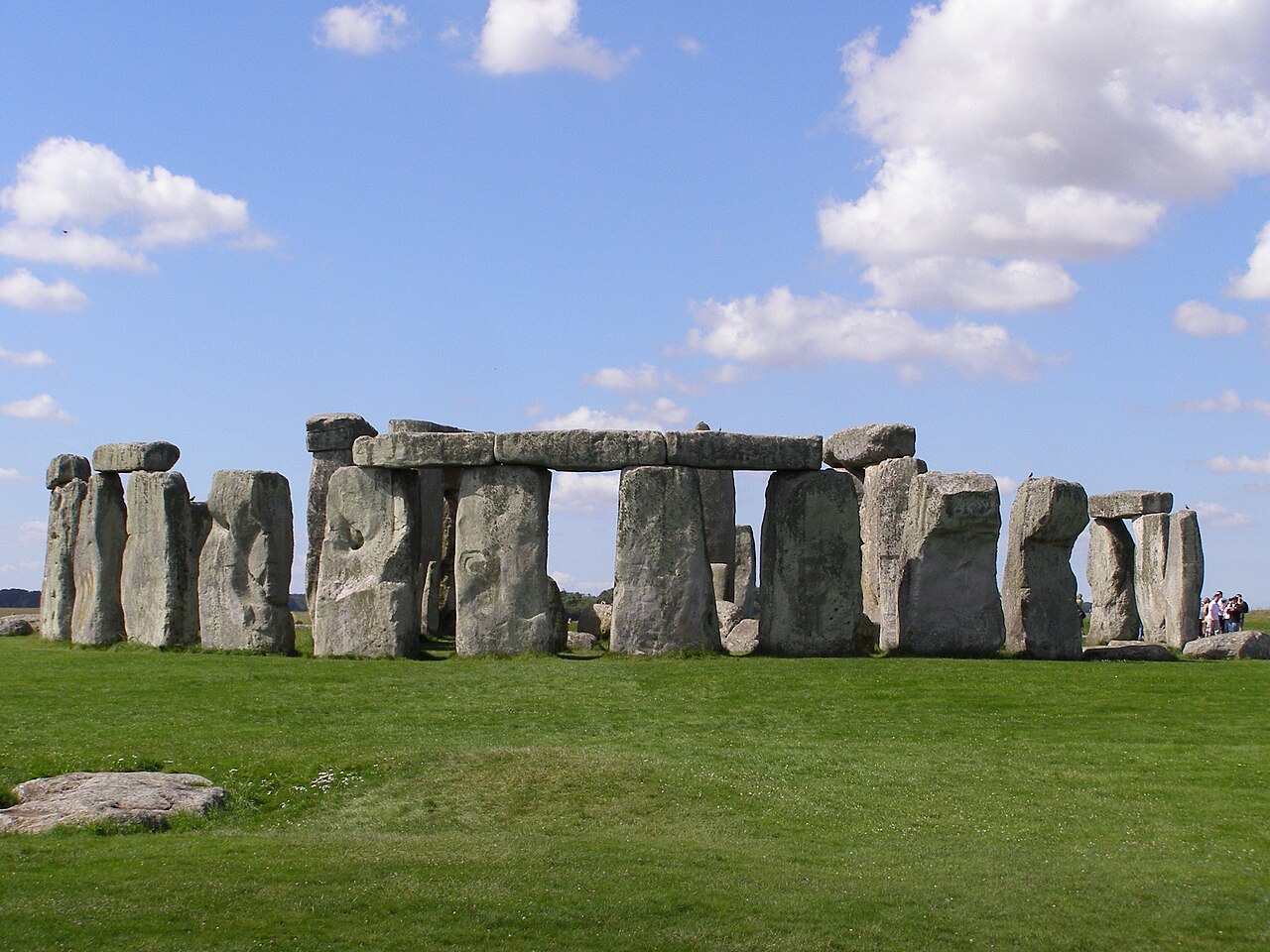
For millennia, the colossal stones of Stonehenge have stood as a silent testament to the ingenuity and mystery of Neolithic people. While much has been speculated and studied about this iconic monument, new scientific revelations are continuing to rewrite its ancient narrative. Central to these discoveries is the Altar Stone, the largest of the non-sarsen stones at the site, which has long been an enigma. Previously, its origins were believed to be local or from Wales, aligning with other bluestones. However, a groundbreaking scientific investigation has now definitively linked this monumental stone to a surprising source: the distant landscapes of Scotland, a revelation that deepens our understanding of prehistoric Britain.
This monumental
Neolithic Masterpiece: Stonehenge Altar Stone's Journey from Scotland Uncovered has not only pinpointed a new origin but has also provided profound insights into the sophisticated capabilities and extensive networks of the people who built Stonehenge. The implications stretch far beyond geology, painting a vivid picture of a society far more organized and interconnected than previously imagined.
The Revolutionary Stonehenge Fingerprint Discovery: A Geological Time Capsule
The journey to uncover the Altar Stone’s true home involved cutting-edge scientific detective work, a process akin to taking a geological fingerprint. Researchers from Curtin University, particularly Dr. Anthony Clarke and Professor Chris Kirkland, spearheaded this forensic analysis. Their work focused on the unique mineral composition of the Altar Stone, which is partially buried beneath two fallen sarsen stones, making it a challenging but crucial subject for study.
The core of this investigation relied on advanced mineral "fingerprinting" methods. Using world-leading instruments at Curtin's John de Laeter Centre, the team meticulously examined microscopic mineral grains, specifically zircon crystals. Zircon is an incredibly tough and durable mineral, making it an ideal "geological time capsule." By analyzing over 500 zircon crystals, scientists could precisely date them and trace their geochemical signatures.
What they found was astonishing: the mineral grains in the Altar Stone were predominantly between 1,000 to 2,000 million years old. This ancient age, combined with the unique geochemical profile, did not match any known geological formations in the immediate vicinity of Stonehenge or even the previously suggested Welsh bluestone sources. Instead, the specific mineral signatures strongly pointed towards an origin within the ancient geological terrains of Scotland. This intricate and precise
Humans, Not Glaciers: Solving Stonehenge's Ancient Stone Transport Mystery via mineral analysis represents a significant leap in archaeological science, offering definitive answers to long-standing questions.
Unraveling the Mystery: Scotland's Ancient Link and the Transport Challenge
The revelation of the Altar Stone's Scottish origins immediately raised a host of fascinating questions, primarily concerning the sheer logistics of its journey. Imagine the scale of the challenge: moving such a massive stone – it’s the largest of the non-sarsen stones, weighing an estimated six tonnes – from what is now Scotland to Salisbury Plain in southern England. This journey would have covered hundreds of miles across land and sea, without the aid of modern machinery or infrastructure.
Professor Chris Kirkland suggests that a marine shipping route along the coast of Britain was a plausible method. This implies the existence of sophisticated seafaring capabilities and perhaps an early form of maritime trade or coordinated expeditions. Dr. Clarke notes that while several possibilities have been suggested – from sailing it down the coast to transporting it over land using rolling logs – the exact method remains unknown. However, the very possibility of such a feat highlights a level of ingenuity and resourcefulness that redefines our perception of Neolithic people.
The discovery fundamentally underscores a significant level of societal coordination during the Neolithic period. It wasn't just about moving a rock; it was about planning, resource allocation, collective effort, and potentially an established network of communication and cooperation spanning vast geographical distances. This single stone, unearthed by modern science, now tells a story of ancient ambition and collective human endeavor.
Beyond Glaciers: The Case for Human Ingenuity
For decades, one of the most enduring debates surrounding Stonehenge has been whether its massive stones were transported by humans or carried to Salisbury Plain by natural glacial movements during the Ice Age. The new research from Curtin University offers the clearest scientific evidence yet that human hands, not ice, were responsible for the monument's bluestones, including the Altar Stone.
Dr. Clarke and his team rigorously tested the glacial theory by examining river sands near Stonehenge. Their hypothesis was simple: if glaciers had carried rocks from distant regions like Scotland or Wales, they would have left a discernible mineral signature in the surrounding landscape. As these glacial erratics eroded over time, they would release tiny mineral grains that could be dated. However, after analyzing the river sands for these tell-tale grains, the researchers found none that originated from glacial deposits.
"If glaciers had carried rocks all the way from Scotland or Wales to Stonehenge, they would have left a clear mineral signature on the Salisbury Plain," Dr. Clarke explained. "We looked at the river sands near Stonehenge for some of those grains the glaciers might have carried and we did not find any. That makes the alternative explanation – that humans moved the stones – far more plausible."
This definitive refutation of the glacial theory strengthens the argument for purposeful human planning and effort. It solidifies the understanding that Stonehenge was not a serendipitous gathering of natural stones, but a deliberate construction, born from immense societal will and advanced capabilities. The
Humans, Not Glaciers: Solving Stonehenge's Ancient Stone Transport Mystery is a testament to the power of modern scientific tools to settle age-old archaeological debates.
Implications for Prehistoric Understanding and Future Research
The
stonehenge fingerprint discovery of the Altar Stone's Scottish origin has profound implications for our understanding of prehistoric Britain. It suggests that:
*
Advanced Societal Organization: The scale of the transport challenge points to a highly organized society capable of long-term planning, resource mobilization, and possibly even multi-generational projects.
*
Long-Distance Trade and Communication Networks: The movement of such a significant stone from Scotland implies established routes and possibly cooperative relationships between disparate communities across Britain. It challenges the notion of isolated, fragmented groups, suggesting a more interconnected Neolithic world.
*
Symbolic Significance: Why bring a stone from so far away? The immense effort involved suggests the Altar Stone held exceptional symbolic or spiritual importance for the builders of Stonehenge, perhaps linking their sacred site to distant, revered landscapes.
*
Refined Chronologies: Pinpointing the origins of stones helps archaeologists refine the timeline of Stonehenge's construction phases and understand the different cultural influences at play.
This scientific breakthrough underscores how modern technology, such as mineral geochronology and geochemical fingerprinting, is continuously reshaping our view of ancient civilizations. It’s a powerful reminder that history is not static; it's a dynamic narrative constantly being refined by new evidence and innovative research. While the specific methods of transport may still be debated, the *fact* of human transport from Scotland now stands as a cornerstone of Stonehenge's story. Future research will undoubtedly delve deeper into the exact routes, technologies, and social structures that made such an incredible feat possible.
Conclusion
The recent
stonehenge fingerprint discovery linking the iconic Altar Stone to ancient Scotland is nothing short of revolutionary. It not only solves a long-standing geological mystery but also dramatically re-evaluates the capabilities and societal complexity of Neolithic people. By definitively ruling out glacial transport and pointing to human ingenuity, scientists have unveiled a prehistoric Britain far more organized and interconnected than previously imagined. As we continue to uncover the secrets embedded within these ancient stones, the story of Stonehenge grows richer, reinforcing its status as one of humanity's most enduring and fascinating archaeological wonders. This journey of scientific exploration reminds us that even the most well-studied monuments still hold profound surprises, waiting to be revealed by the persistent curiosity and advanced tools of modern research.