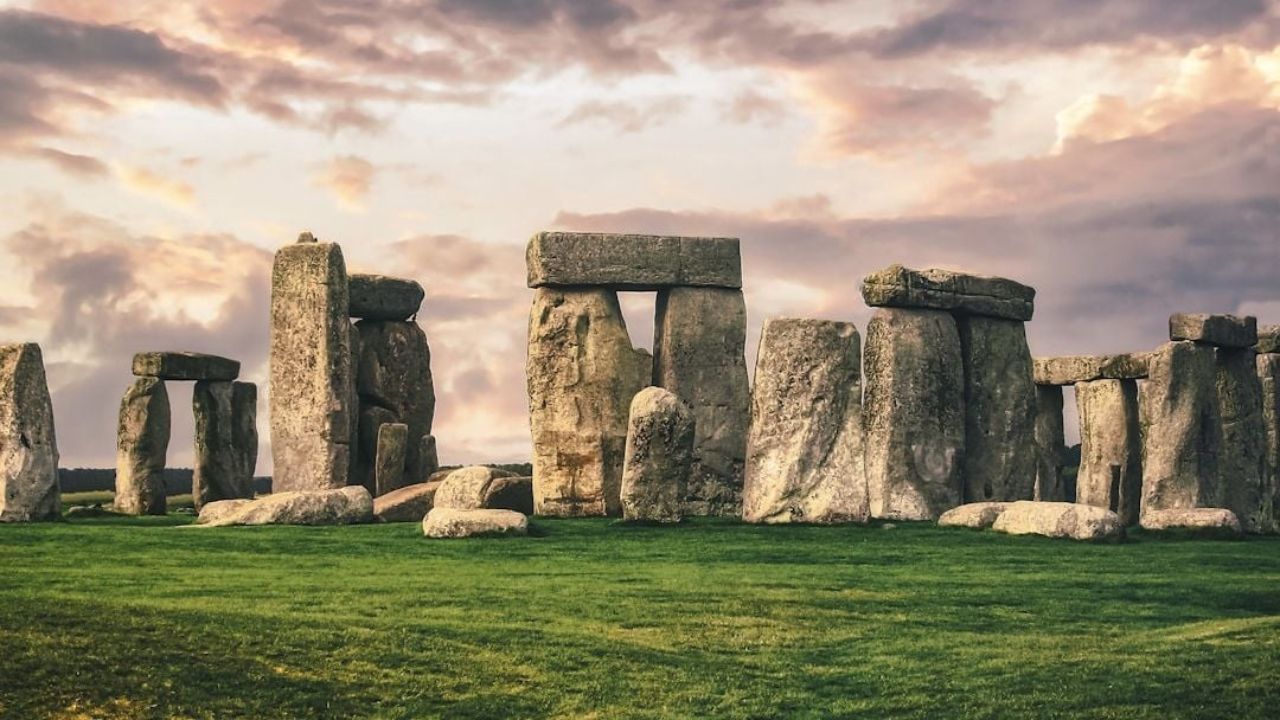
Neolithic Masterpiece: Stonehenge Altar Stone's Journey from Scotland Uncovered
Stonehenge, the enigmatic circle of megaliths on Salisbury Plain, has captivated humanity for millennia. Its very existence poses profound questions about the ingenuity, beliefs, and organizational capabilities of our Neolithic ancestors. While archaeologists and geologists have long debated the origins and transportation of its colossal stones, a groundbreaking new investigation, leveraging a sophisticated stonehenge fingerprint discovery, has overturned long-held assumptions about one of its most pivotal components: the Altar Stone.
For generations, scholars believed they had a firm grasp on the Altar Stone's history—a majestic presence now partially hidden beneath two fallen sarsen stones, yet historically central to the monument's layout. This largest of Stonehenge's non-sarsen stones was generally assumed to hail from Wales, like many of its bluestone companions. However, the latest scientific advancements have delivered a startling revelation, pointing to an origin far further north, in the rugged landscapes of Scotland. This discovery doesn't merely redraw maps; it fundamentally reshapes our understanding of prehistoric Britain, suggesting levels of coordination and ambition previously unimagined.
The Astonishing Stonehenge Fingerprint Discovery: Unveiling the Altar Stone's True Roots
The key to unlocking the Altar Stone's true provenance lies in an innovative technique known as "mineral fingerprinting." Scientists from Curtin University, utilizing world-leading instruments at the John de Laeter Centre, embarked on an ambitious study to scrutinize the microscopic mineral grains embedded within the stone. Specifically, they focused on zircon crystals, one of Earth's toughest minerals, renowned for their ability to preserve geological "time capsules" spanning eons. These resilient crystals act like geological detectives, retaining distinct signatures that can pinpoint their original source.
The analysis yielded extraordinary results. The specific mineral grains found in the Altar Stone were aged primarily between a staggering 1,000 to 2,000 million years old. This ancient geological signature is not consistent with the Welsh quarries previously associated with Stonehenge's bluestones. Instead, it bore an unmistakable match to geological formations found in specific regions of Scotland. Dr. Anthony Clarke, lead author of the study from Curtin's School of Earth and Planetary Sciences, highlighted the significance of these ancient ages, noting their clear discrepancy with other known bluestone sources. This precise Stonehenge Altar Stone: New Scottish Origin Revealed by Science represents a monumental leap in our understanding of the monument's construction.
This scientific breakthrough underscores the power of modern analytical techniques in unraveling ancient mysteries. It’s not just about identifying the geographical source; it’s about providing irrefutable geological evidence that challenges decades of archaeological consensus, proving that even the most thoroughly studied sites can still hold revolutionary secrets.
Debunking the Glacial Myth: The Human Endeavor
For a long time, one prevailing theory for how such massive stones, particularly the bluestones, arrived at Stonehenge was that they were transported by glaciers during the Ice Age. The idea was that retreating ice sheets could have plucked these stones from their original locations and carried them passively to the Salisbury Plain. While this concept offered a seemingly less labor-intensive explanation for the movement of heavy rocks, new research, significantly bolstered by the Altar Stone's origins, delivers a decisive blow to the glacial hypothesis.
Dr. Clarke and his team meticulously investigated river sands near Stonehenge, looking for a clear mineral signature that would have been left behind if glaciers had indeed carried rocks all the way from Scotland or Wales. His rationale was simple yet profound: if glaciers had brought the stones, they would have also deposited a vast amount of smaller, eroded mineral fragments from the same sources across the landscape. The team found no such evidence.
"If glaciers had carried rocks all the way from Scotland or Wales to Stonehenge, they would have left a clear mineral signature on the Salisbury Plain," Dr. Clarke explained. "Those rocks would have eroded over time, releasing tiny grains that we could date to understand their ages and where they came from. We looked at the river sands near Stonehenge for some of those grains the glaciers might have carried and we did not find any. That makes the alternative explanation—that humans moved the stones—far more plausible."
This conclusive lack of glacial evidence strengthens the case dramatically for deliberate human transport. It firmly aligns with the findings from the Altar Stone's origin, making it almost certain that Humans, Not Glaciers: Solving Stonehenge's Ancient Stone Transport Mystery. This shift in understanding elevates the accomplishments of Neolithic societies from mere opportunistic users of natural phenomena to master planners and engineers.
A Feat of Neolithic Engineering: Transporting a Megalith
The sheer scale of transporting the Altar Stone—a monumental rock weighing potentially tens of tonnes—from Scotland to Salisbury Plain, covering distances exceeding 500 miles, presents an engineering challenge that continues to astound modern minds. This isn't merely moving a heavy object; it's about navigating diverse terrain, potentially rivers and seas, without the aid of modern machinery.
While the exact methods remain shrouded in the mists of time, researchers have put forward various compelling theories. One prominent suggestion, supported by co-author Chris Kirkland, involves a marine shipping route along the coast of Britain. Imagine rudimentary boats or rafts, perhaps lashed together from timber, carefully laden with the massive stone, navigating unpredictable coastal waters. This would have required not only incredible seafaring skill but also detailed knowledge of tides, currents, and safe harbors along a vast stretch of coastline. Another possibility, less likely for such immense distances but potentially used for shorter legs, involves overland transport using rolling logs, ropes, and vast teams of laborers, a method depicted in various historical reconstructions for other megalithic structures.
Regardless of the precise technique, what is undeniable is the colossal effort, meticulous planning, and profound societal coordination this endeavor would have demanded. It speaks to an unparalleled determination and a shared vision among Neolithic communities, possibly driven by deep spiritual beliefs or significant communal ceremonies. The logistics alone—feeding and housing hundreds or thousands of people, managing the procurement of resources like timber and rope, and orchestrating the movement over months or even years—paint a picture of an advanced society far beyond simple hunter-gatherer models.
Rethinking Prehistoric Britain: Societal Coordination and Trade
The stonehenge fingerprint discovery does more than just solve a geological puzzle; it provides a crucial new lens through which to view the entire Neolithic period in Britain. The journey of the Altar Stone from Scotland to Stonehenge is not merely a tale of rock movement; it's a testament to a complex, interconnected prehistoric world.
Chris Kirkland of Curtin University rightly points out that this discovery implies "long-distance trade networks and a higher level of societal organization than is widely understood to have existed during the Neolithic period in Britain." This challenges the traditional perception of Neolithic communities as largely localized and self-sufficient. Instead, we must envision a landscape traversed by people, ideas, and goods, forging connections across vast geographical expanses. The "Altar Stone Highway" from Scotland suggests established routes, perhaps even protocols for interaction and exchange between different groups.
This level of societal coordination—the ability to mobilize significant manpower and resources over extended periods for a single monumental project—hints at a sophisticated social structure, possibly with strong leadership or communal decision-making processes. It suggests a shared cultural identity or a powerful religious significance attached to the monument that could inspire such immense collective effort. The sourcing of a uniquely ancient and distinct stone from hundreds of miles away might have endowed the Altar Stone with profound symbolic power, perhaps representing a connection to ancient lands or mythical origins. This wasn't just construction; it was an act of profound cultural and spiritual integration on a national scale, predating the formation of anything resembling a nation-state.
In conclusion, the stonehenge fingerprint discovery of the Altar Stone's Scottish origins represents a pivotal moment in our understanding of one of the world's most iconic ancient monuments. By using cutting-edge mineral fingerprinting, scientists have not only pinpointed a new source but have definitively bolstered the argument for purposeful human transport over glacial action. This re-evaluation demands that we acknowledge the truly extraordinary capabilities of Neolithic people: their advanced engineering skills, their capacity for immense societal coordination, and the existence of extensive long-distance networks across prehistoric Britain. Stonehenge continues to speak to us across the millennia, revealing new layers of complexity and wonder with every scientific breakthrough, reminding us of the enduring legacy of human ingenuity.