Humans, Not Glaciers: Solving Stonehenge's Ancient Stone Transport Mystery
For centuries, the colossal stones of Stonehenge have stood as a silent testament to ancient ingenuity and an enduring archaeological enigma. Among the most puzzling questions surrounding this prehistoric monument is how its massive stones, particularly the bluestones and the central Altar Stone, journeyed from distant lands to Salisbury Plain. Was it the raw power of natural forces, like glaciers, or the sheer determination and advanced planning of Neolithic humans? Recent groundbreaking research, leveraging a sophisticated
stonehenge fingerprint discovery technique, has finally tipped the scales, providing compelling evidence that humans, not ice, were the true architects of this monumental feat.
The Enduring Mystery of Stonehenge's Origins
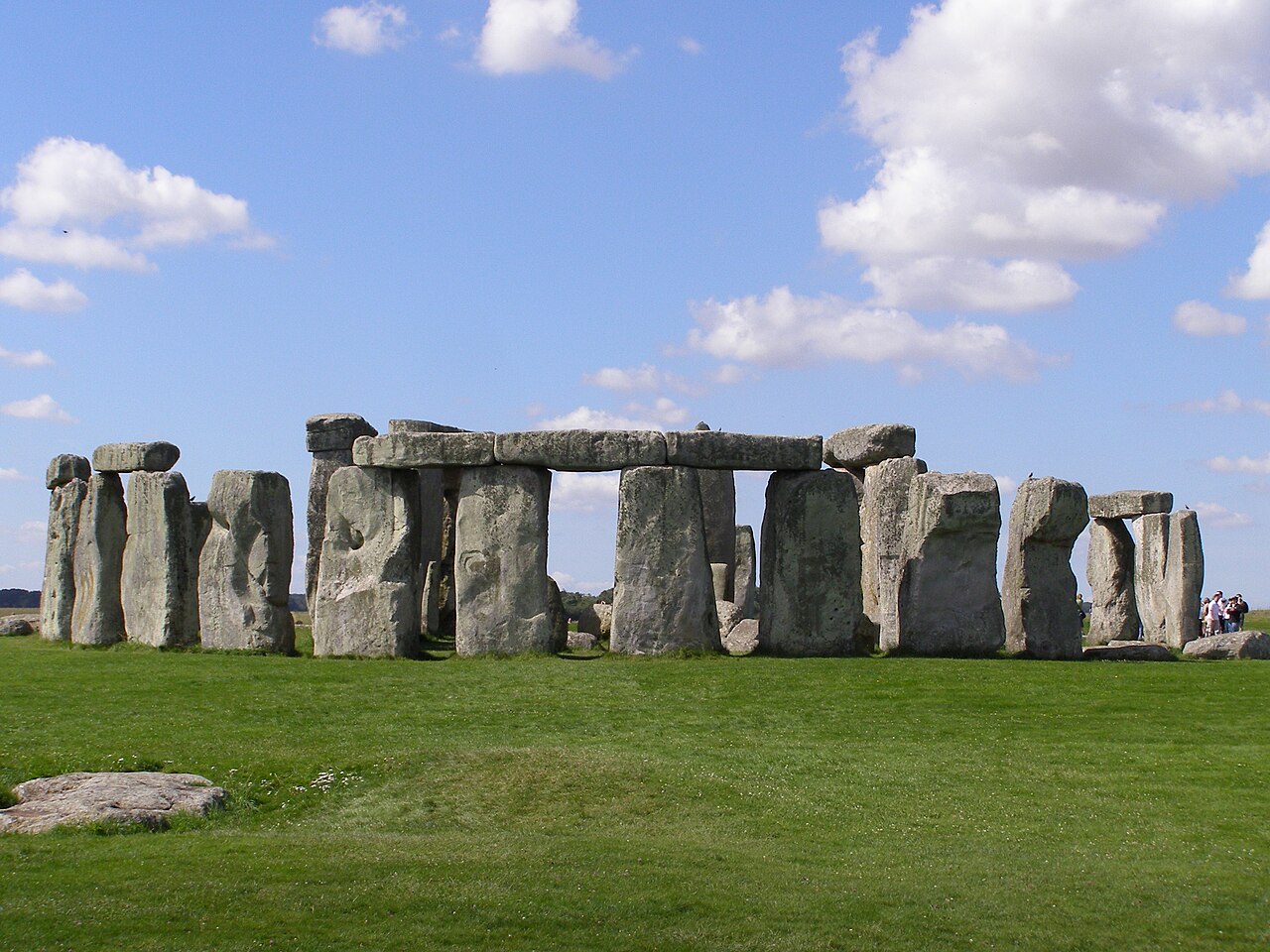
Stonehenge, a UNESCO World Heritage site, is composed of various types of stone. The largest are the sarsens, local sandstone boulders weighing up to 30 tons. However, the monument also features smaller, yet still substantial, bluestones, some weighing up to 4 tons. For decades, archaeologists and geologists have debated the source and transportation methods of these non-sarsen stones. The prevailing theories often pitted human effort against natural phenomena, specifically the idea that glaciers from the last Ice Age might have passively carried these stones hundreds of miles from their geological origins. This glacial hypothesis offered a convenient explanation for the immense logistical challenge of moving such heavy rocks without modern technology. Yet, it inadvertently diminished the perceived capabilities of our prehistoric ancestors. The latest
stonehenge fingerprint discovery, however, challenges this long-held notion and illuminates the extraordinary organizational skills of Neolithic societies.
The `Stonehenge Fingerprint Discovery`: Unmasking the Altar Stone's Scottish Roots
At the heart of this scientific breakthrough lies the Altar Stone, the largest non-sarsen stone at Stonehenge, now partially hidden beneath fallen monoliths. For generations, its exact origin remained elusive. Researchers from Curtin University employed advanced mineral "fingerprinting" methods to meticulously analyze microscopic grains within the stone, particularly robust zircon crystals. Zircon is an ideal mineral for this kind of detective work because it's incredibly tough and preserves geological evidence of its journey through time.
The analysis of hundreds of zircon crystals revealed a startling truth: the Altar Stone's mineral grains are predominantly between 1,000 to 2,000 million years old, a geological age that points to an origin far north of Stonehenge. This distinctive mineral signature – its "fingerprint" – surprisingly matches geological formations found in Scotland, specifically along the Scottish coastline. This stunning
stonehenge fingerprint discovery not only resolves a long-standing puzzle but also paints a much more complex and fascinating picture of prehistoric Britain.
This revelation has profound implications, suggesting a truly epic journey for this single stone. As Dr. Anthony Clarke, lead author of the study, noted, identifying the Altar Stone's Scottish origins raises critical questions about *how* such a massive stone could have been transported such an incredible distance. For deeper insights into this specific finding, explore
Stonehenge Altar Stone: New Scottish Origin Revealed by Science and
Neolithic Masterpiece: Stonehenge Altar Stone's Journey from Scotland Uncovered.
Debunking the Glacial Theory: No Ice Trails on Salisbury Plain
While pinpointing the Altar Stone's Scottish origin was a monumental step, the Curtin University team went further to definitively address the glacial transport hypothesis. If glaciers had indeed carried these stones from Scotland or even Wales to Salisbury Plain, they would have left an undeniable geological signature. Over millennia, such glacier-borne rocks would have eroded, releasing tiny mineral grains into the local environment.
To test this, scientists examined river sands near Stonehenge for these specific mineral traces. Using world-leading instruments at Curtin's John de Laeter Centre, they meticulously analyzed sediment samples. The results were conclusive: *no* indication of glacier-transported minerals from distant sources was found on Salisbury Plain. "If glaciers had carried rocks all the way from Scotland or Wales to Stonehenge, they would have left a clear mineral signature on the Salisbury Plain," explained Dr. Clarke. "We looked at the river sands near Stonehenge for some of those grains the glaciers might have carried and we did not find any."
This absence of evidence is itself powerful evidence. It critically undermines the glacial theory, significantly strengthening the argument for purposeful human intervention. The findings provide the clearest scientific support yet that ancient people deliberately undertook the monumental task of transporting these stones, rather than simply stumbling upon them after a natural event.
Neolithic Masterminds: Implications of Human Transport
The debunking of the glacial theory and the definitive tracing of the Altar Stone to Scotland through the
stonehenge fingerprint discovery transforms our understanding of Neolithic societies in Britain. It elevates our perception of their capabilities from simple hunter-gatherers to highly organized, ingenious communities capable of feats of engineering and logistics previously underestimated.
Consider the implications:
- Advanced Societal Coordination: Moving a stone weighing several tons over hundreds of miles, whether by land or sea, would require immense planning, leadership, resource allocation, and sustained collective effort. This speaks to a sophisticated social hierarchy and a robust decision-making process within Neolithic communities.
- Long-Distance Trade Networks: The Altar Stone's journey suggests established routes, possibly marine shipping routes along the coast of Britain, implying a level of long-distance interaction and perhaps even trade or exchange networks far more complex than commonly understood for the period.
- Ingenious Problem-Solving: While the exact methods remain debated – whether by sea on rafts or boats, or overland using rolling logs and sledges – the very act of moving such stones demonstrates an incredible capacity for practical engineering and innovative problem-solving. It's a testament to human ingenuity to overcome formidable natural obstacles.
- A Deeper Understanding of Prehistoric Britain: This research helps paint a fascinating picture of a dynamic prehistoric Britain, where communities were interconnected, ambitious, and capable of monumental achievements driven by reasons we are still trying to fully grasp – perhaps spiritual, territorial, or social.
This discovery serves as a powerful reminder that our ancestors were far from primitive. They possessed the intelligence, foresight, and collaborative spirit to conceive and execute projects on an epic scale. While we may never know the precise method used for every stone, the overwhelming evidence from the
stonehenge fingerprint discovery points to the incredible human will that shaped this enduring wonder.
Conclusion
The
stonehenge fingerprint discovery regarding the Altar Stone's Scottish origins marks a pivotal moment in understanding one of history's greatest archaeological puzzles. By definitively ruling out glacial transport and providing compelling evidence for human intervention, scientists have unveiled a new chapter in the Stonehenge narrative. It's a story not of passive natural forces, but of active, intelligent, and highly organized Neolithic people who consciously moved these monumental stones across vast distances. This breakthrough not only deepens our appreciation for the engineering prowess of our ancient ancestors but also encourages us to re-evaluate the complexity and sophistication of societies that existed thousands of years ago, reminding us that the human spirit of ambition and collaboration has a truly ancient lineage.